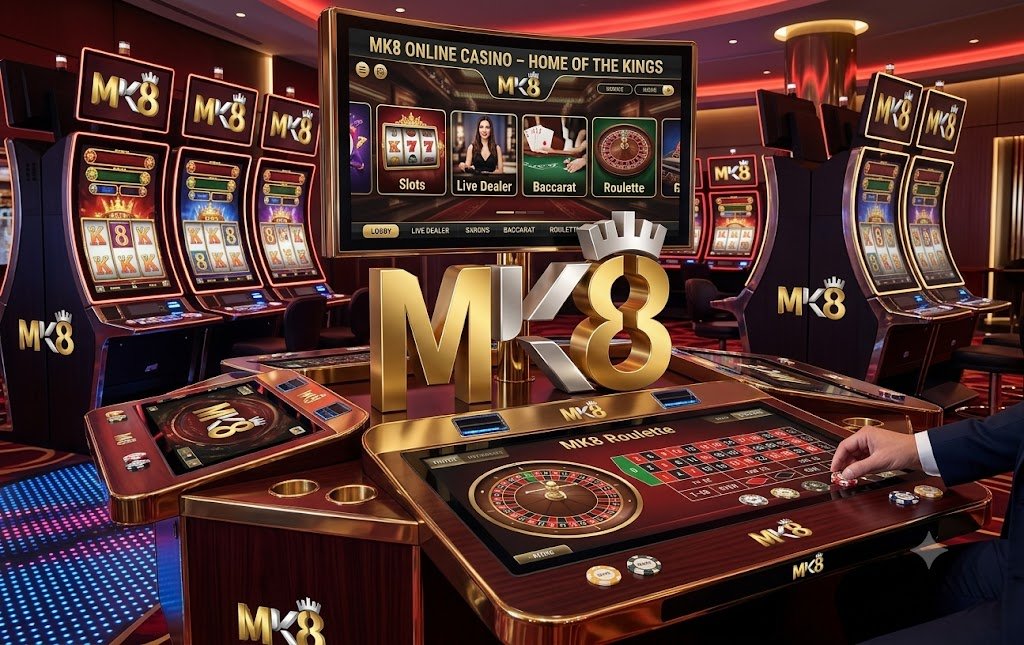

Gomk8 Malaysia Gaming History 2026: From Traditional Casino Machines to Modern Online Gaming
The gaming industry has undergone a remarkable transformation over the past century. What began with mechanical machines, physical game rooms and simple electronic entertainment has evolved into a global digital industry accessible through smartphones, computers and internet browsers.
Today, many games no longer require dedicated gaming hardware. A modern web browser can display interactive graphics, process user input and communicate with remote servers.
For readers researching Gomk8 Malaysia, understanding this technological history provides useful background on how digital entertainment developed and why modern gaming websites look very different from earlier gaming systems.
The history of gaming is not simply a story about faster computers. It also involves changes in software distribution, consumer expectations, telecommunications, payment systems and regulation.
This Gomk8 gaming history guide 2026 explores the evolution from mechanical casino machines to electronic video games, internet-based gaming and modern HTML5 browser technology.
The article provides historical and technological education. It does not claim that Gomk8 operated during any of the historical periods discussed.
How Did Online Gaming Begin?
Online gaming developed gradually as computers became capable of communicating across networks.
Early networked games were limited by the computing power and communications infrastructure available at the time.
As personal computers became more common and internet access expanded, developers began creating games that could connect players or deliver entertainment remotely.
The growth of graphical web browsers, broadband connections and smartphones later made internet-based gaming accessible to much larger audiences.
Modern online entertainment combines many technologies developed over several decades.
To understand today’s digital platforms, it helps to begin with the mechanical gaming machines that existed long before the internet.
1. The Mechanical Era: Early Slot Machines
Mechanical slot machines emerged during the late nineteenth century.
These machines used physical mechanisms rather than digital software to display and determine results.
One of the most widely recognized early slot machines was the Liberty Bell, associated with inventor Charles Fey in the 1890s.
Its design helped establish the familiar concept of spinning reels displaying combinations of symbols.
Mechanical machines were operated through physical controls and contained components such as reels, springs and gears.
Unlike modern digital gaming systems, they did not rely on internet connections or web browsers.
Their significance lies in the development of a recognizable gaming interface that would later be reproduced electronically.
2. Why Traditional Slot Machines Became Recognizable
Early slot machines used relatively simple visual arrangements.
A small number of reels and symbols made the basic concept easy to recognize.
Over time, the imagery associated with slot machines became familiar in popular culture.
Symbols such as bells, fruit and number combinations remained recognizable even as the underlying technology changed.
This continuity is an interesting example of how interface design can survive technological transitions.
Modern digital slot games may look more elaborate, but some visual conventions originated in much earlier mechanical systems.
3. The Transition from Mechanical to Electromechanical Machines
As electrical technology developed, gaming machines began incorporating powered components.
Electromechanical designs combined physical mechanisms with electrical controls.
This transition allowed manufacturers to introduce features that were difficult to implement using purely mechanical equipment.
It also created a foundation for later electronic systems.
However, electromechanical machines were not equivalent to modern computer-based games.
They represented an intermediate stage in the development of gaming hardware.
4. The Rise of Electronic Video Gaming
The development of electronic computing created opportunities for entirely new forms of entertainment.
Early computer games demonstrated that interactive experiences could be created through software.
During the 1970s and 1980s, arcade machines and home video game systems helped introduce electronic gaming to wider audiences.
Games could now display moving objects, respond to controls and implement rules through electronic systems.
This was a major shift from physical mechanical entertainment.
Software increasingly became the central component of the gaming experience.
5. How Video Slot Machines Changed Casino Technology
Video slot machines replaced physical reel displays with electronic screens.
Instead of relying entirely on visible mechanical components, the game interface could be presented digitally.
This made it possible to introduce different layouts, animations and interactive features.
The use of electronic displays also created opportunities for more flexible visual design.
However, a digital display does not by itself establish how a game’s outcomes are generated.
The underlying game rules and technical implementation remain separate questions.
Readers should distinguish the history of display technology from the mathematics and fairness of individual games.
6. The Personal Computer Revolution
Personal computers helped expand gaming beyond arcades and dedicated entertainment machines.
Users could install games on their own computers and interact with increasingly sophisticated software.
As computer hardware improved, developers gained access to better graphics, sound and processing capabilities.
The growth of PC gaming also encouraged new forms of distribution.
Games could be sold through physical media and, eventually, downloaded electronically.
This development helped prepare the industry for internet-based entertainment.
7. How the Internet Changed Gaming
The internet introduced a major change: games and entertainment services could communicate with remote systems.
Rather than operating entirely on one device, software could exchange information across a network.
This supported multiplayer interactions, remote account systems and online content delivery.
Internet connectivity also changed the relationship between users and software providers.
Developers could distribute updates and maintain online services after a game was released.
However, online connectivity introduced new challenges involving latency, server reliability and cybersecurity.
8. The Emergence of Online Casino Websites
As internet access expanded during the 1990s, gambling-related websites began appearing.
These early services represented a different model from physical casino venues.
Users could interact with gambling software through connected computers, subject to the technical limitations and legal frameworks of the time.
However, the historical emergence of online gambling did not make it lawful everywhere.
Countries developed different approaches to licensing, regulation and restrictions.
The existence of an online casino website therefore should never be interpreted as proof that its services are legally authorized in a particular jurisdiction.
9. Early Online Gaming and Slow Internet Connections
Early internet users often relied on dial-up connections.
These connections were much slower than modern broadband services and could be disrupted by ordinary telephone-line usage.
Large downloads and graphics-heavy experiences were difficult to deliver efficiently.
Developers therefore had to consider bandwidth limitations carefully.
Simpler interfaces, smaller files and less demanding graphics were common practical choices.
The gradual improvement of internet infrastructure helped make more sophisticated online entertainment possible.
10. The Broadband Era
Broadband internet brought important improvements in connectivity.
Compared with many earlier dial-up services, broadband could provide faster and more convenient internet access.
This supported the growth of digital downloads, online multiplayer games and media streaming.
For entertainment platforms, broadband created opportunities to deliver richer content.
However, network speed was not the only factor influencing user experience.
Server performance, software efficiency and network stability continued to matter.
11. The Flash Gaming Era
Adobe Flash played a significant role in the history of browser-based entertainment.
For many years, Flash enabled developers to create interactive animations and games that could run through supported browser environments.
Flash games became familiar across numerous entertainment websites.
However, the technology depended on a browser plugin and faced growing compatibility and security challenges.
Adobe ended support for Flash Player after December 31, 2020.
The transition away from Flash encouraged wider adoption of modern web technologies.
12. The Rise of HTML5 Browser Games
HTML5 and related web technologies helped transform browser-based entertainment.
Modern web applications can use technologies such as HTML, CSS, JavaScript, Canvas and WebGL to create interactive experiences.
Unlike older plugin-dependent approaches, these technologies are supported through contemporary browser standards.
This allows developers to create experiences accessible across different operating systems and device categories.
However, compatibility still depends on the browser, hardware and implementation.
A website described as HTML5-based is not automatically fast, secure or suitable for every device.
13. Why Browser Gaming Became More Convenient
Browser-based gaming can reduce some barriers associated with traditional software installation.
Users may be able to access supported experiences through a web browser without downloading a separate desktop application.
This can make distribution easier for developers and access more convenient for users.
However, browser gaming still requires suitable software, hardware and network conditions.
Some games may also use significant storage, processing power or internet bandwidth.
Convenience should not be confused with guaranteed performance.
14. Smartphones Changed the Gaming Industry
The widespread adoption of smartphones transformed digital entertainment.
Touchscreens, mobile processors and wireless internet access created new ways to interact with games.
Developers increasingly designed interfaces for smaller screens and touch-based controls.
Mobile gaming also made entertainment more accessible outside traditional home computer environments.
For Malaysian consumers, smartphones became an important gateway to digital services, including communication, shopping and entertainment.
However, increased accessibility can also create challenges involving screen time, privacy and impulsive spending.
15. The Evolution from Desktop Websites to Mobile-First Design
Early websites were commonly designed around desktop monitors and mouse-based navigation.
As smartphone usage increased, developers began placing greater emphasis on responsive layouts.
Mobile-first design prioritizes experiences suitable for smaller screens.
This can include touch-friendly controls, readable typography and layouts that adapt to different display sizes.
Modern gaming websites may use these principles to improve accessibility.
However, the design quality of any specific platform must be evaluated directly rather than assumed from industry trends.
16. Cloud Computing and Modern Gaming Infrastructure
Cloud computing allows organizations to access computing resources through remote infrastructure.
This can support hosting, storage, application processing and other digital services.
For gaming businesses, cloud infrastructure may help manage changing traffic levels and distribute workloads.
However, cloud computing is not the same as cloud gaming.
Cloud gaming generally refers to systems where game processing takes place remotely and audiovisual output is streamed to the user’s device.
These technologies serve different purposes, although they may sometimes be used together.
17. How Digital Payments Changed Online Entertainment
Digital payment technology influenced the commercial development of online services.
Traditional software purchases were often completed through physical retail channels.
Over time, electronic payments made it easier for consumers to purchase digital products and subscriptions.
In Malaysia, systems such as FPX and DuitNow form part of the broader electronic payment environment.
However, access to payment technology does not establish that every transaction or business activity is legally permitted.
For readers researching online casino Malaysia information, payment availability and legal authorization must be evaluated separately.
18. The Rise of Streaming and Live Digital Entertainment
Improvements in internet infrastructure also supported video streaming.
Users could watch entertainment without downloading an entire video file in advance.
This changed industries such as music, film, esports and live broadcasting.
Streaming technology can also support interactive entertainment experiences.
However, video streaming and gambling are not identical industries.
Their business models, legal requirements and consumer risks can differ substantially.
19. How Gaming Graphics Evolved
Gaming graphics developed from relatively simple visual representations to sophisticated digital environments.
Early games often used limited colors, basic shapes and low-resolution displays.
Advances in graphics processors and software enabled more detailed animation, lighting and visual effects.
Modern browser technologies can also support complex graphics.
However, visual sophistication does not establish the quality, fairness or reliability of a gaming service.
An attractive interface should not replace independent evaluation of the platform itself.
20. The Role of Game Engines
A game engine is a software framework that helps developers create interactive experiences.
Game engines may provide tools for rendering graphics, processing input, simulating physics and managing game logic.
Using an engine can reduce the need to develop every technical component from the beginning.
However, game engines vary widely in their capabilities and licensing arrangements.
Not every browser game uses the same engine.
The underlying technology of a specific gaming website should not be assumed without supporting evidence.
21. Gaming History and the Development of Regulation
Gaming technology developed alongside changing legal and regulatory environments.
Different countries adopted different rules for video games, gambling, digital payments and consumer protection.
These legal frameworks continue to evolve.
For example, rules governing an ordinary video game purchase may differ significantly from those governing gambling activities.
In Malaysia, gambling is subject to legal restrictions.
Readers should not assume that the international growth of online gambling means that equivalent activities are lawful in Malaysia.
22. Mechanical vs Electronic vs Browser Gaming
| Historical Stage | Main Technology | Typical Experience |
|---|---|---|
| Mechanical machines | Physical reels and mechanisms | On-site interaction |
| Electromechanical machines | Mechanical parts with electrical controls | On-site electronic assistance |
| Video gaming machines | Electronic screens and software | Digitally displayed games |
| Personal computer games | Local computer hardware | Installed software |
| Early internet gaming | Networked computers | Remote connectivity |
| Flash browser games | Browser plugin technology | Web-based interactive content |
| Modern HTML5 gaming | Web standards and browser APIs | Cross-device browser experiences |
| Cloud-based gaming services | Remote computing infrastructure | Network-dependent delivery |
Each stage contributed to the development of modern digital entertainment.
23. What Gaming History Means for Gomk8 Malaysia Readers
For readers researching Gomk8, gaming history helps explain why modern online platforms combine several generations of technology.
A contemporary gaming website may use browser interfaces, remote servers, digital graphics and internet-based account systems.
However, this article does not establish which specific technologies Gomk8 currently uses.
That would require direct technical verification.
The broader historical lesson is that the industry has shifted from physical, location-dependent equipment toward software-based and internet-connected experiences.
Understanding that transition can help readers evaluate modern gaming claims more carefully.
24. How Online Gaming May Continue to Evolve
Gaming technology will likely continue changing as hardware, software and telecommunications develop.
Areas of ongoing interest include cloud computing, artificial intelligence, accessibility and cross-device experiences.
However, future developments are uncertain.
Not every emerging technology will become widely adopted, and technological advancement does not automatically improve consumer outcomes.
The future of gaming will depend on a combination of technical feasibility, commercial demand, regulation and user expectations.
Frequently Asked Questions About Gomk8 Gaming History 2026
1. When were the first slot machines invented?
Mechanical slot machines developed during the late nineteenth century. Charles Fey’s Liberty Bell is a widely recognized early example from the 1890s.
2. Who invented the Liberty Bell slot machine?
The Liberty Bell slot machine is associated with inventor Charles Fey.
3. How did mechanical slot machines work?
They used physical components, including reels and mechanical systems, rather than modern computer software.
4. When did video games become popular?
Arcade and home video games expanded significantly during the 1970s and 1980s.
5. When did online gaming begin?
Networked gaming developed before the modern web, while commercial internet gaming expanded as internet access became more widespread.
6. When did online casino websites emerge?
Online gambling websites began emerging during the 1990s, although their legal status varied across jurisdictions.
7. What was Flash gaming?
Flash gaming involved interactive content developed using Adobe Flash technology, which was widely used for browser games before support ended.
8. Why did HTML5 replace Flash for many browser games?
Modern web technologies reduced dependence on browser plugins and provided broader compatibility with contemporary devices and browsers.
9. Can modern games run directly in a browser?
Yes. Many games use modern web technologies to run through compatible browsers.
10. How did smartphones change gaming?
Smartphones introduced portable touch-based gaming and expanded access to digital entertainment.
11. Is cloud gaming the same as browser gaming?
No. Cloud gaming typically involves remote game processing and streaming, while browser gaming refers to experiences accessed through web browsers.
12. Does gaming history prove Gomk8 is a legitimate or licensed platform?
No. Historical information does not establish the legal authorization, ownership or trustworthiness of any individual website.
13. Is online casino gambling legal in Malaysia?
Gambling activities are subject to Malaysian legal restrictions. Readers should consult current legislation and qualified legal guidance rather than assuming a website is authorized.
14. What is the biggest change in gaming technology?
One major change is the shift from dedicated physical equipment toward software-based entertainment accessible through general-purpose devices and internet connections.
Responsible Gambling and Malaysian Legal Considerations
The historical development of casino technology does not eliminate the risks associated with gambling.
Mechanical machines, electronic gaming systems and internet-based casino games can all involve financial losses.
Modern technology may make gambling services easier to access, but convenience does not make gambling a reliable source of income.
In Malaysia, gambling activities are subject to legal restrictions. Readers can consult the Laws of Malaysia portal for relevant legislation.
For information and support concerning gambling-related harm, visit GambleAware or Gambling Therapy.
Conclusion: Understanding Gomk8 Malaysia Gaming History in 2026
Gaming has evolved from mechanical machines into a diverse digital industry supported by software, telecommunications and modern computing infrastructure.
The development of electronic displays, personal computers, internet connectivity, smartphones and HTML5 technology helped shape today’s entertainment experiences.
For readers researching Gomk8 Malaysia, understanding this history provides useful context for evaluating modern gaming technology.
However, technological progress should not be confused with evidence of platform quality, financial safety or legal authorization.
The most useful lesson from gaming history is that technology changes continuously, while the need for accurate information, consumer protection and responsible decision-making remains important.experiences.
Ultimately, recognizing the difference between feelings, assumptions and evidence is an important part of responsible digital entertainment.